

Whitepaper
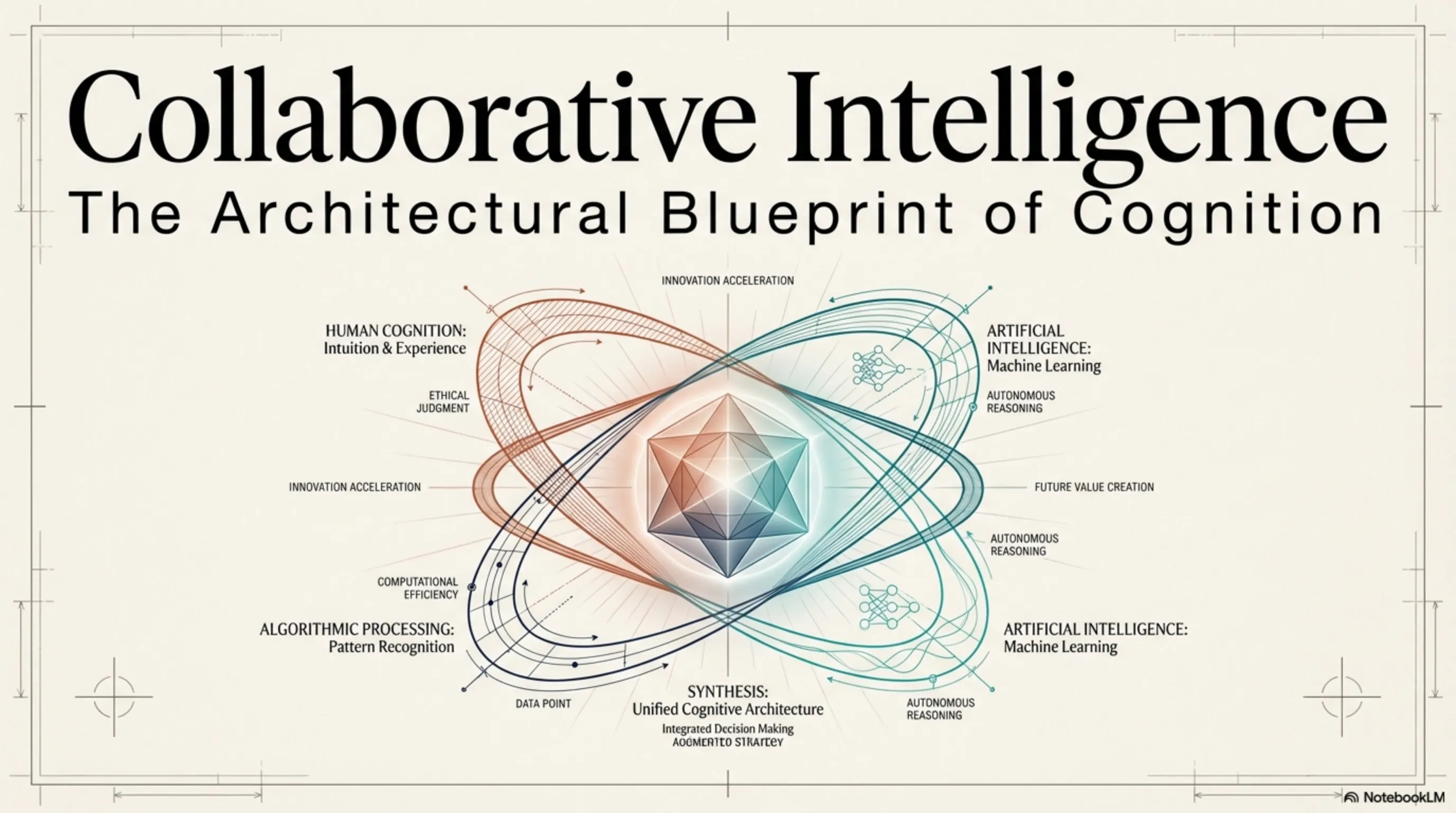
The Intelligence Blueprint
FVI's framework for collaborative intelligence — how human ingenuity and AI partner to deliver outcomes that neither can produce alone.
14 pages · scroll to read · loads progressively
Integrated Intelligence Architecture
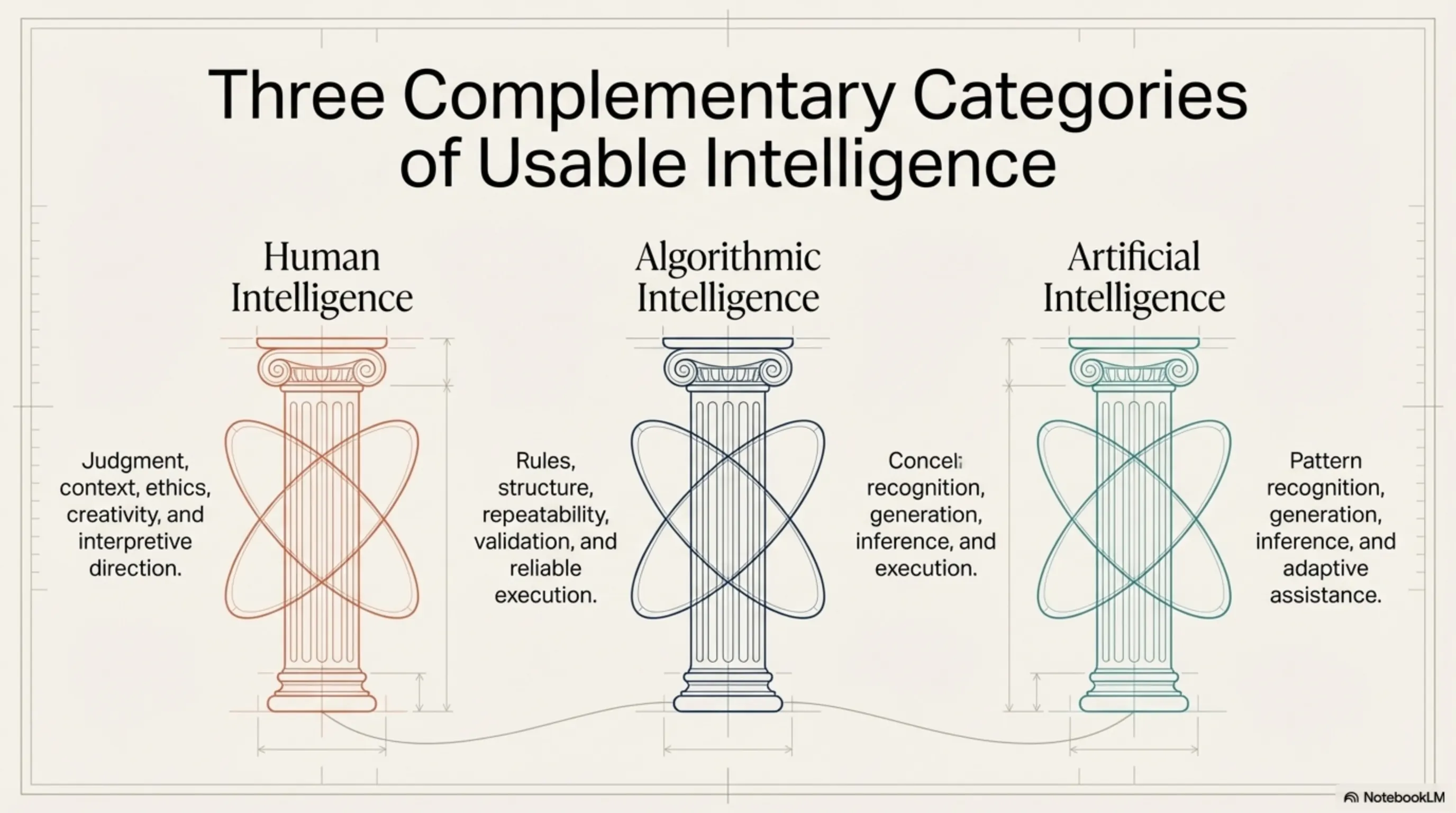
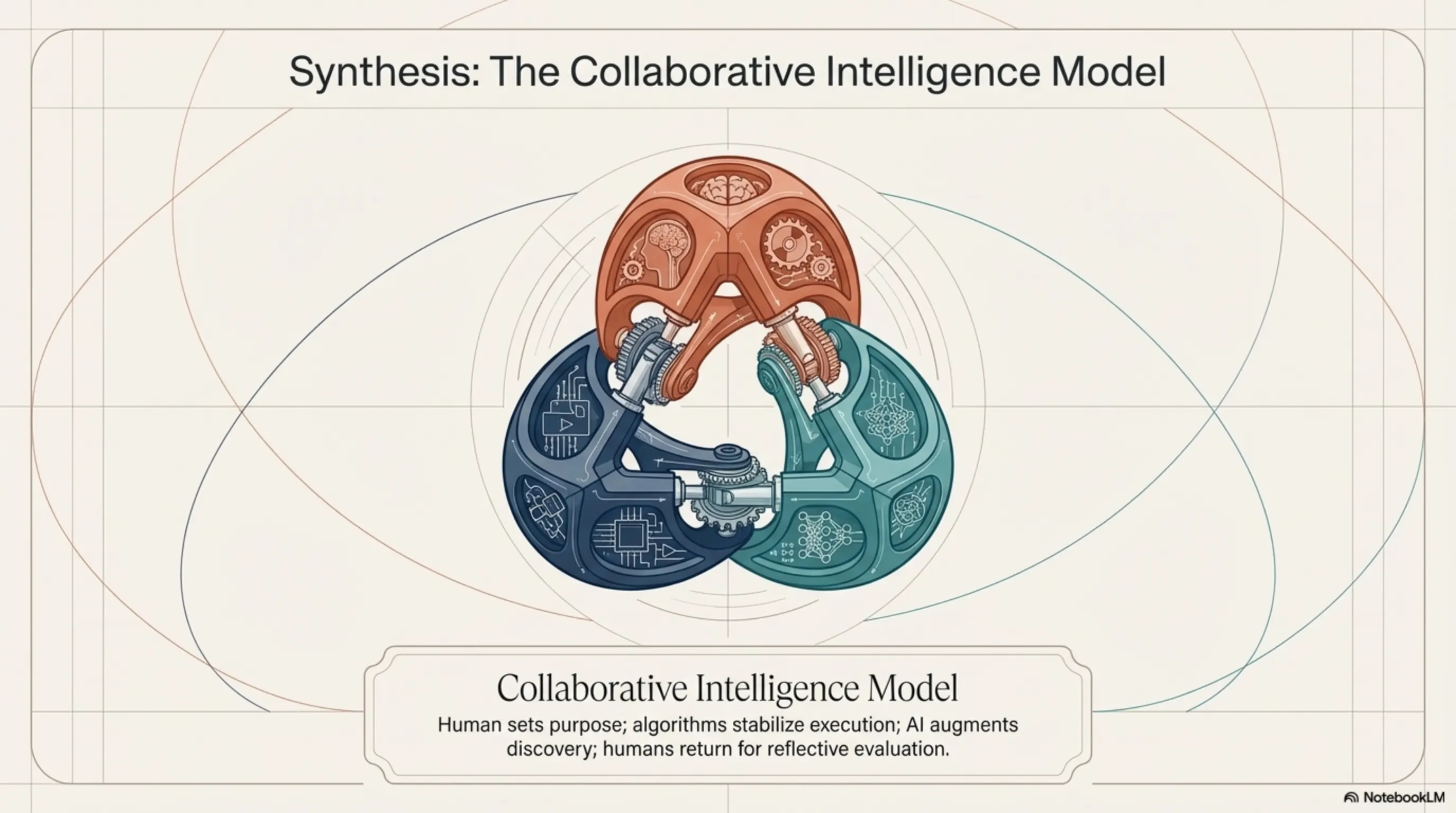
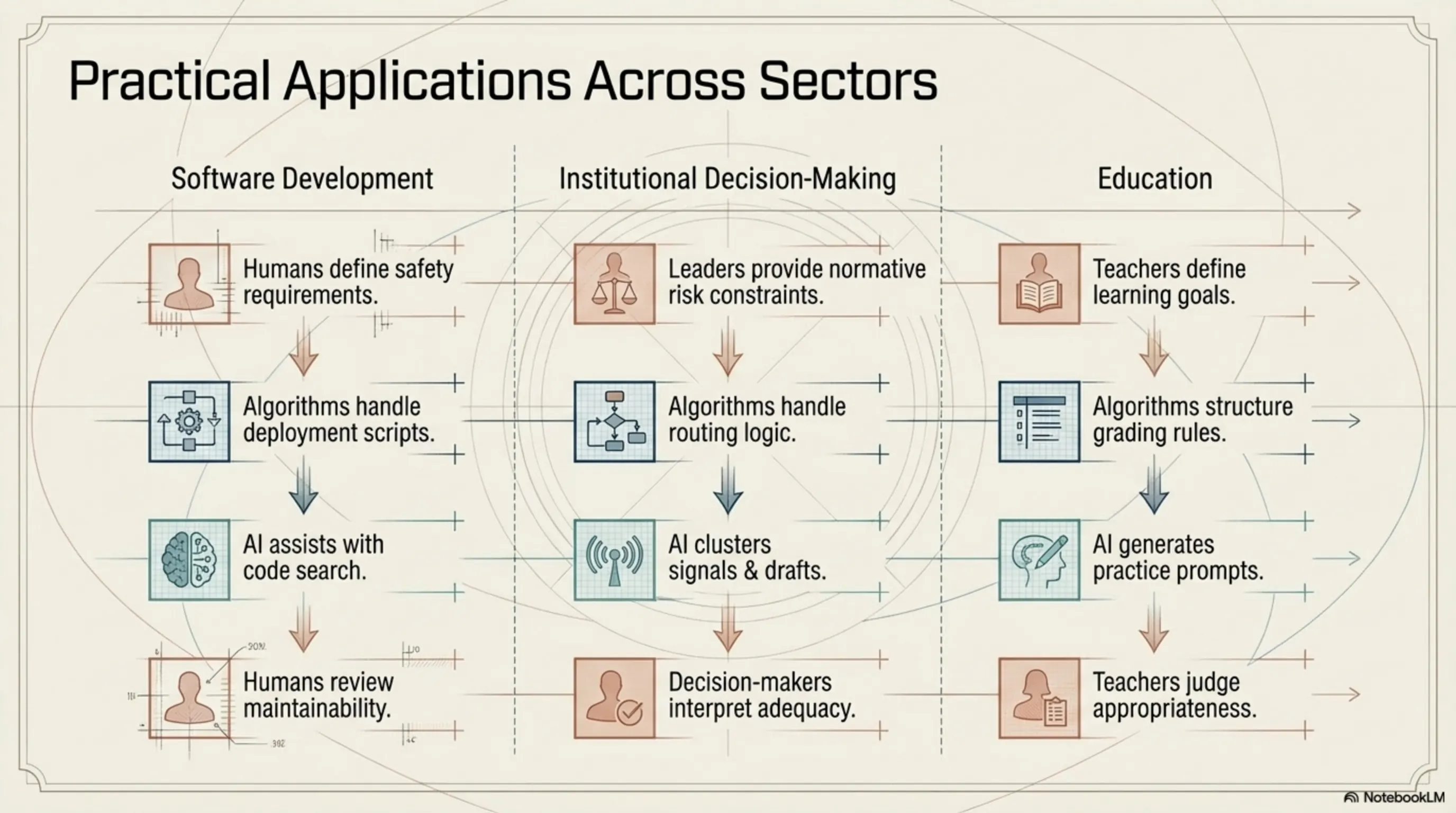
The Three Intelligences
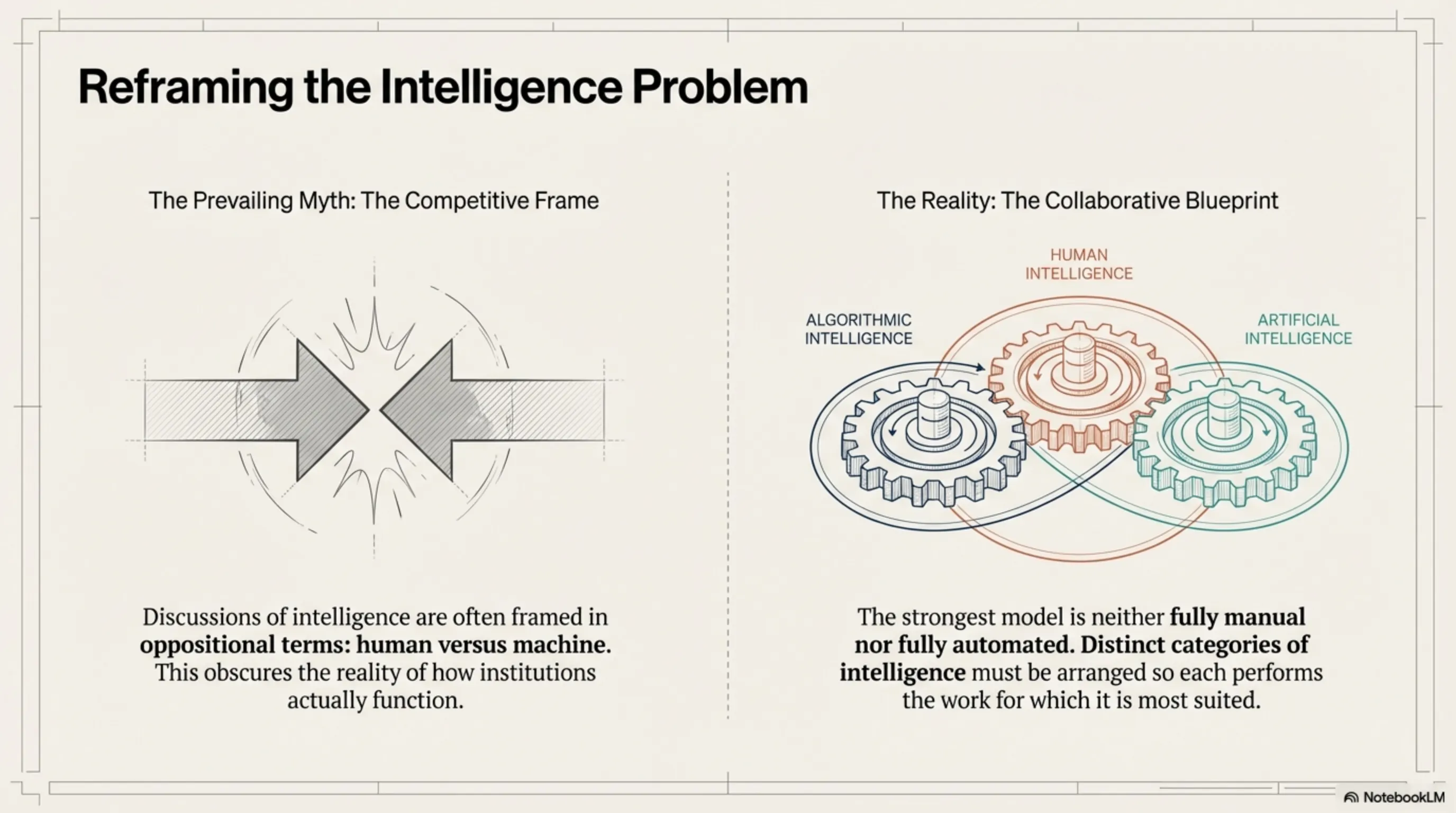
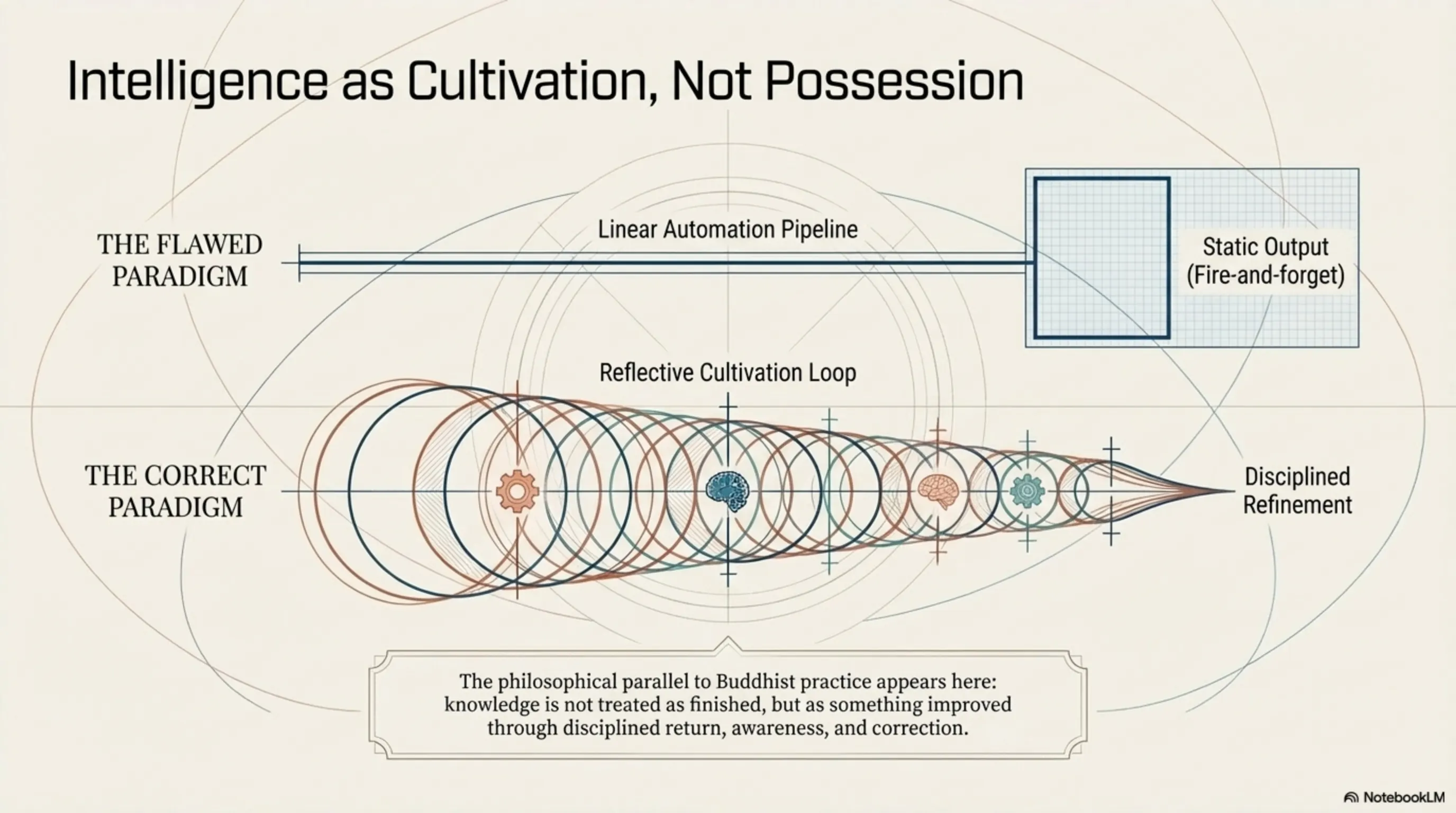
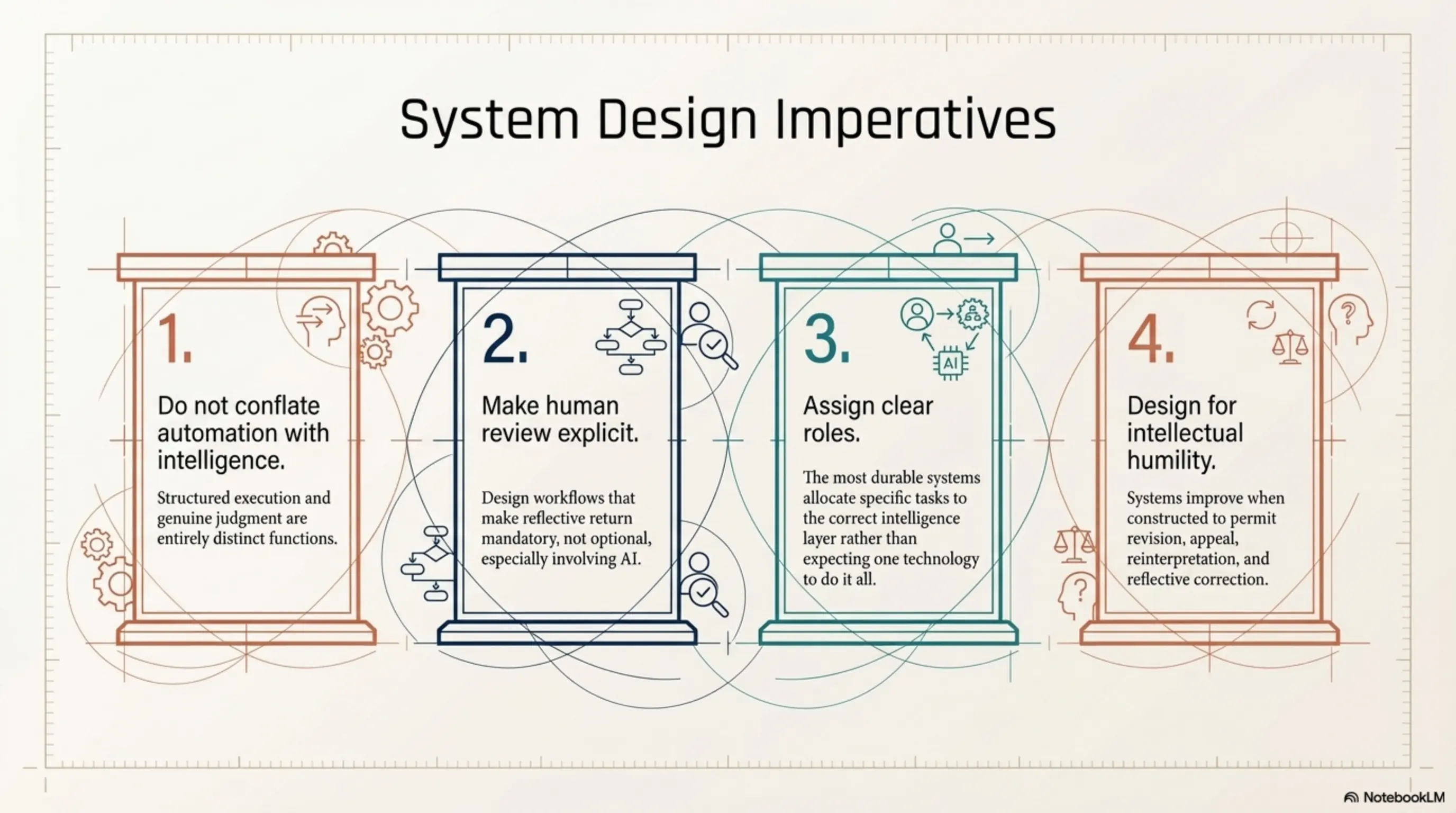
Every durable system blends three distinct kinds of intelligence. Knowing each one's strengths — and where it fails — is what makes collaboration deliberate instead of accidental.
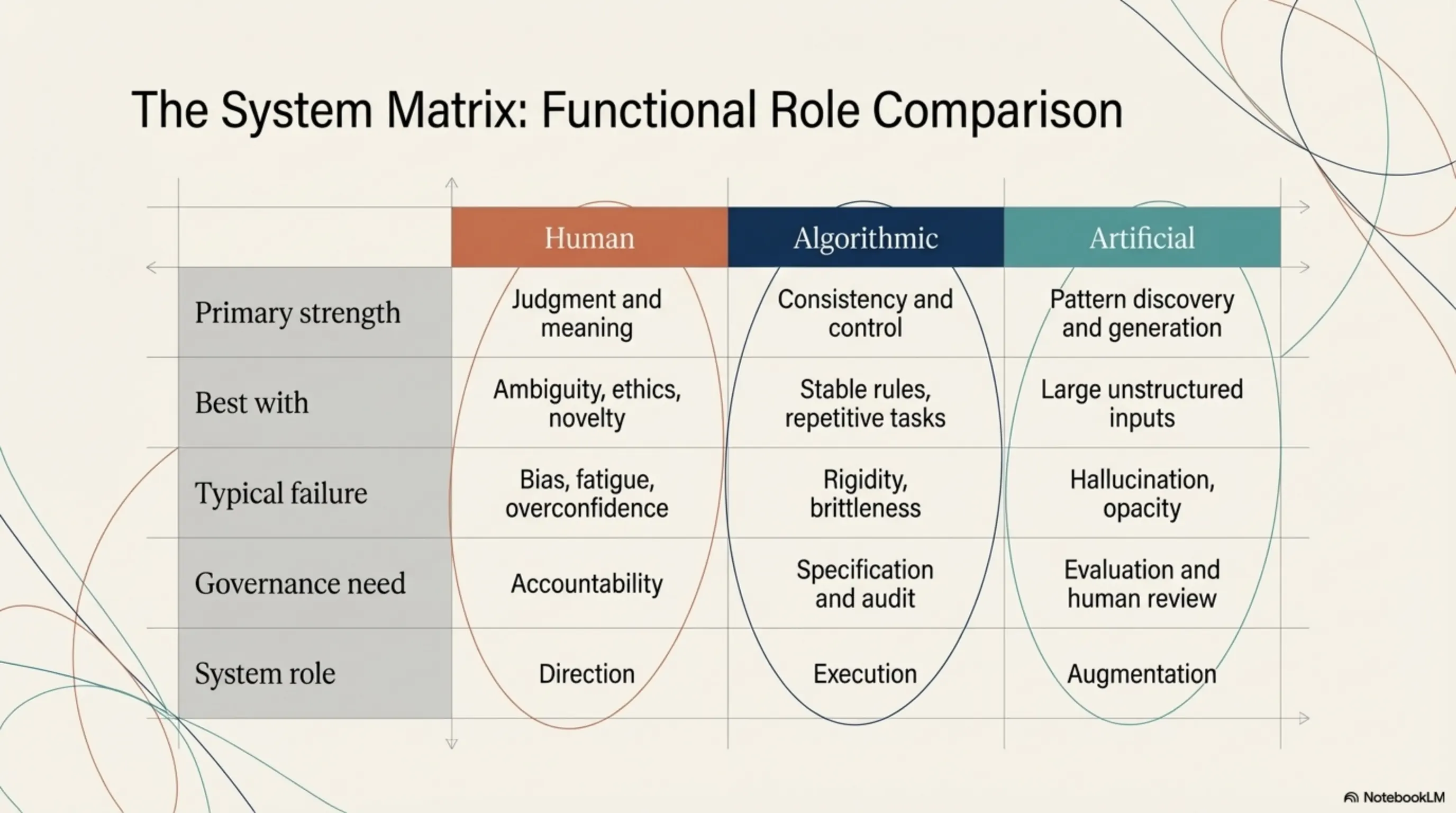
- Direction
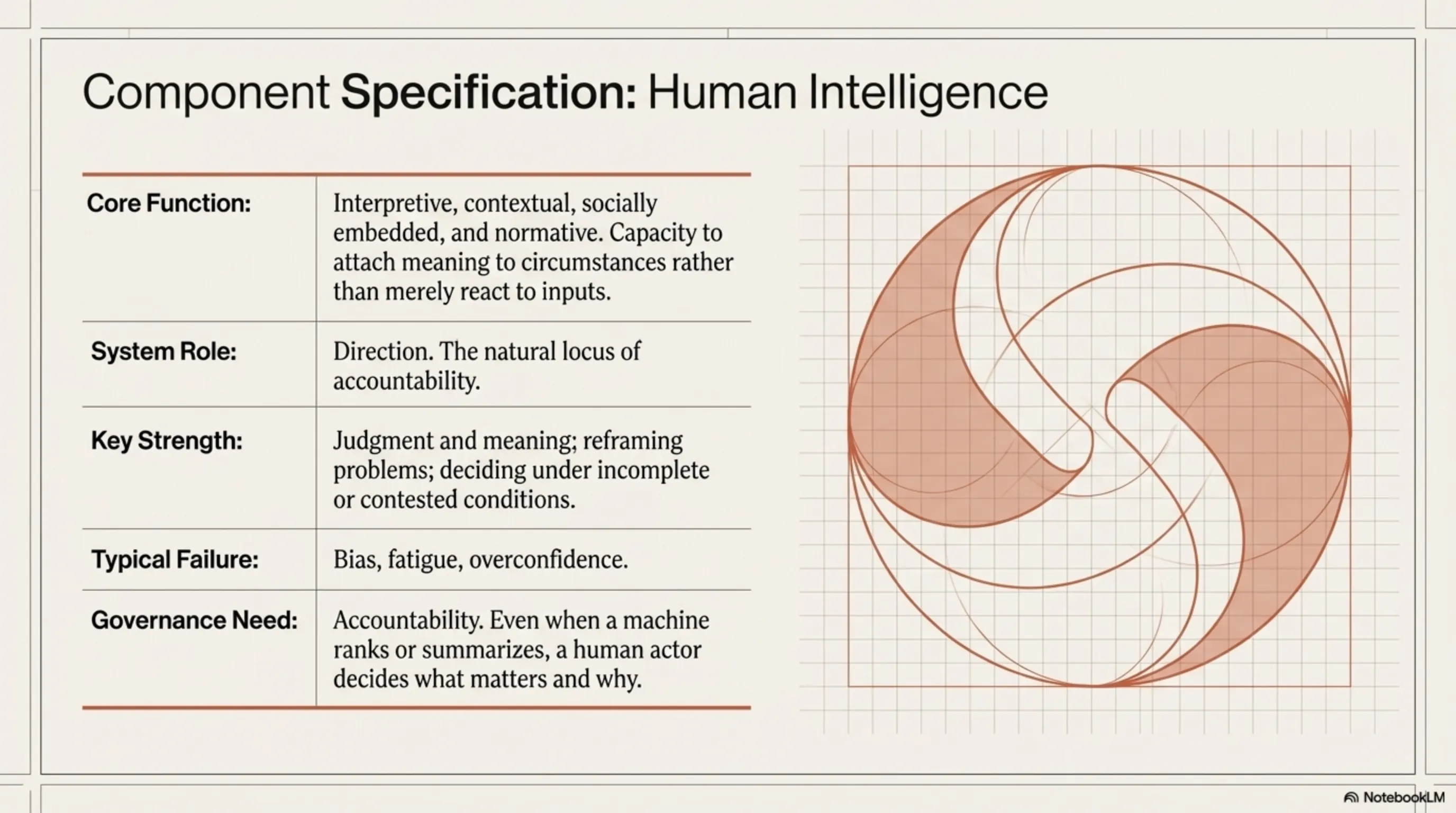
Human Intelligence
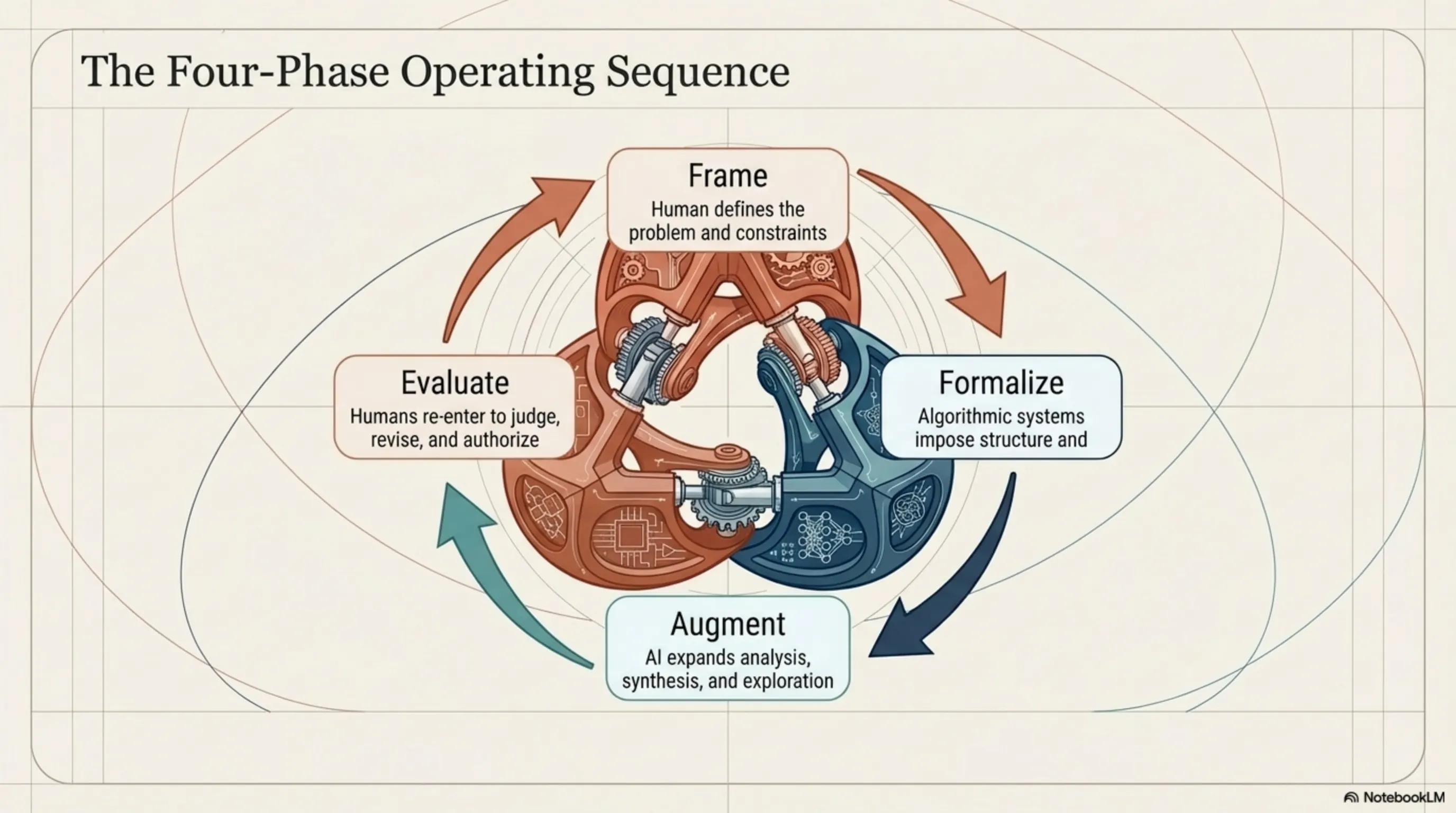
System role: Decide
- Primary function
- Interpretive, contextual, and normative — attaches meaning to complex circumstances and serves as the natural locus of accountability.
- Key strength
- Judgment and meaning; reframing problems and deciding under contested conditions.
- Typical failure
- Bias, fatigue, and overconfidence.
- Governance need
- Accountability — human actors determine what matters and why.
- Execution
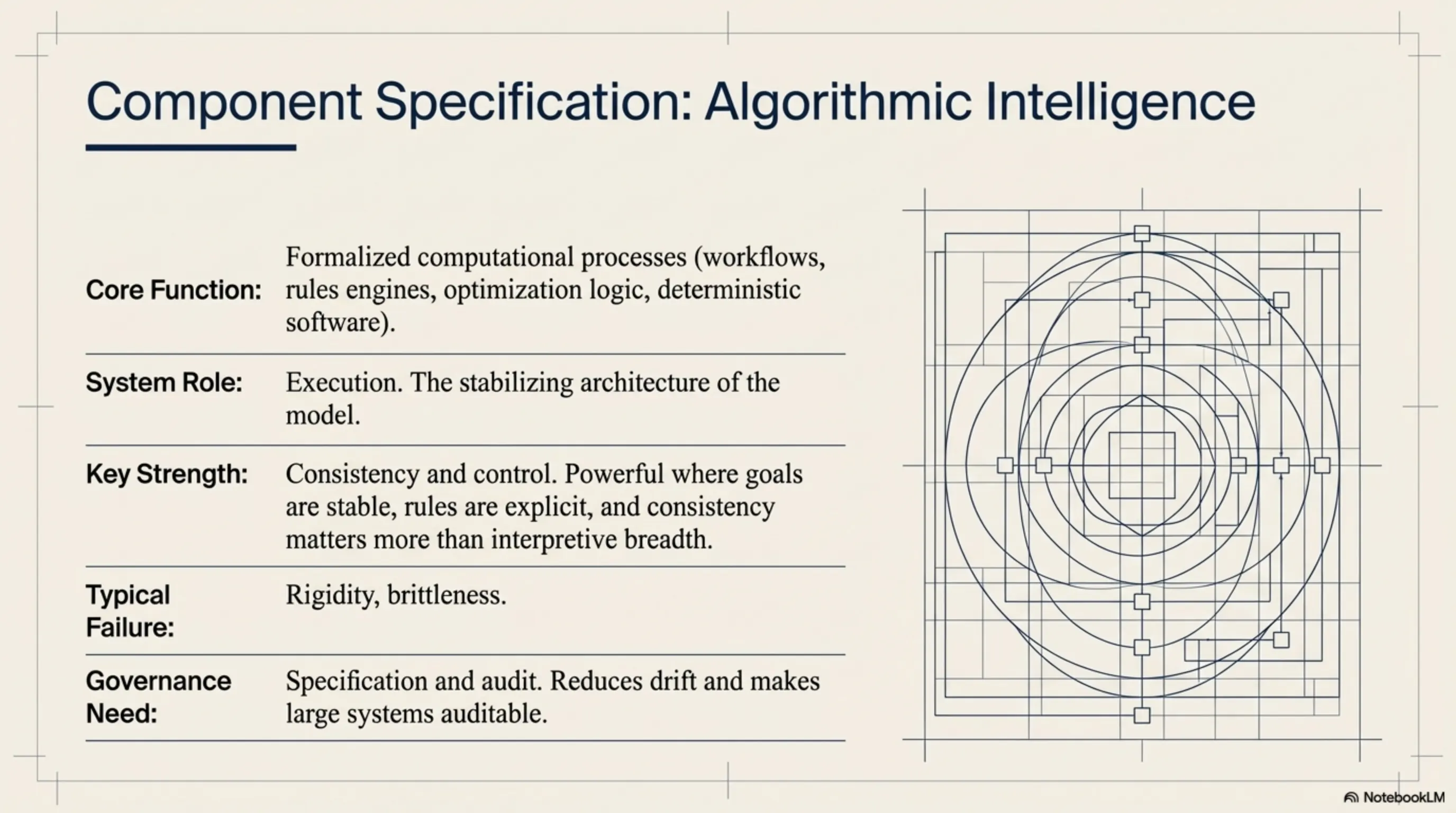
Algorithmic Intelligence
System role: Execute
- Primary function
- Formalized computational processes — rules engines, optimization logic, and deterministic workflows that provide the stabilizing architecture of the model.
- Key strength
- Consistency and control; effective where goals are stable and rules are explicit.
- Typical failure
- Rigidity and brittleness.
- Governance need
- Specification and audit — reduces drift and ensures system auditability.
- Augmentation
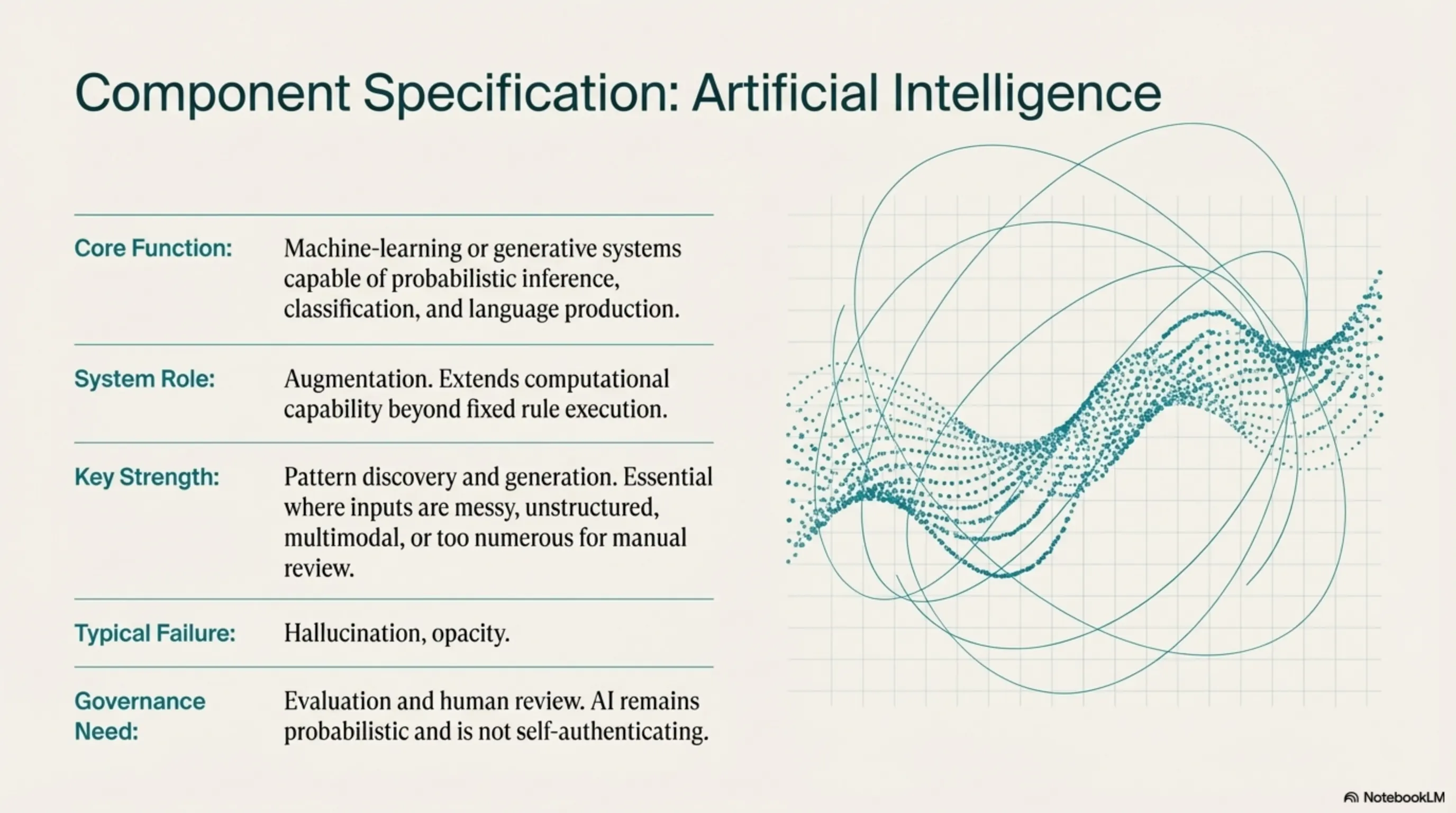
Artificial Intelligence
System role: Augment
- Primary function
- Probabilistic inference, classification, and language production via machine-learning models that extend capability beyond fixed rule execution.
- Key strength
- Pattern discovery and generation; effective with messy or unstructured data.
- Typical failure
- Hallucination and opacity.
- Governance need
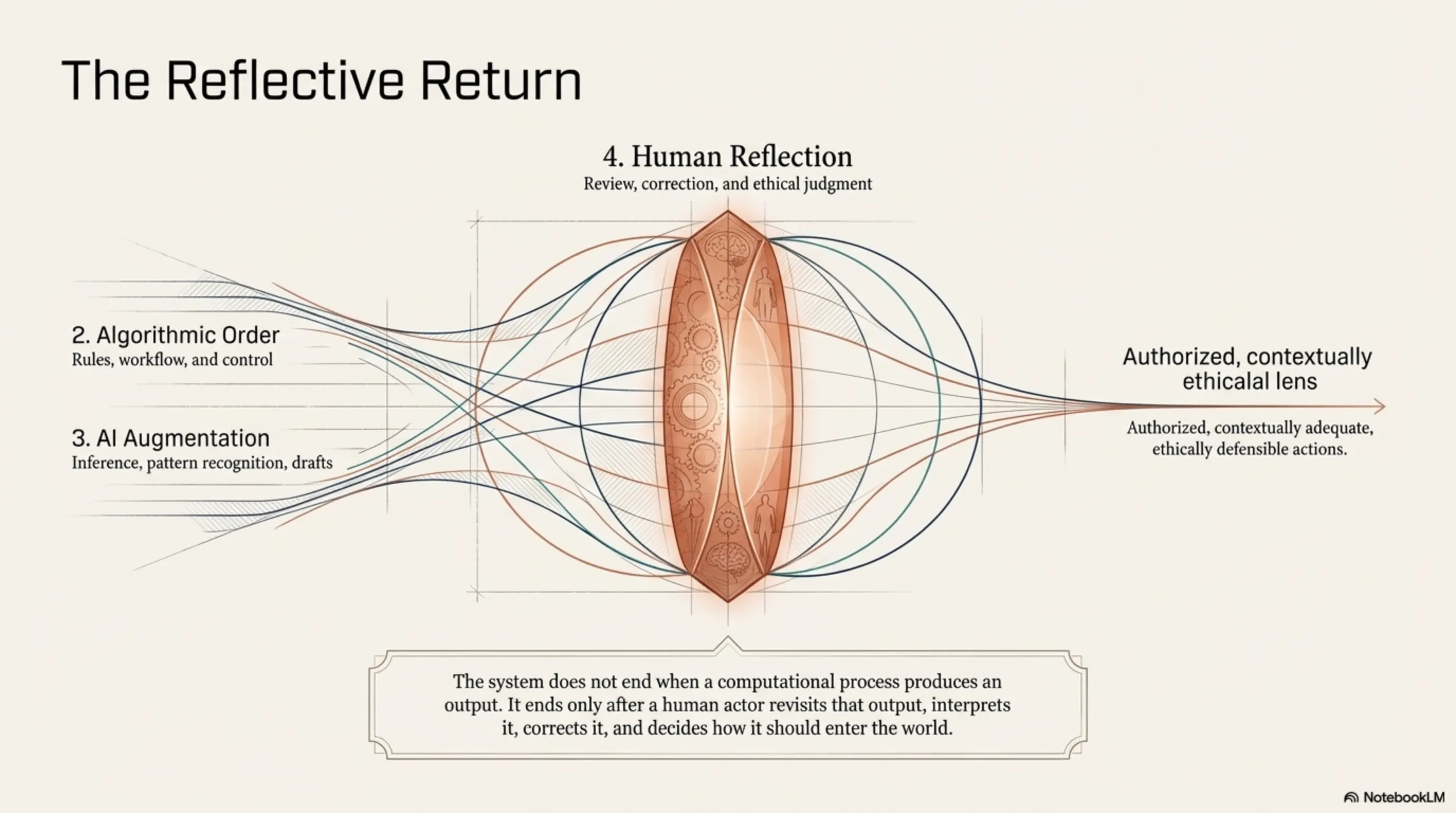
- Evaluation and human review — addresses probabilistic and non-self-authenticating output.
Source: The Intelligence Blueprint — Future Vision Intelligence
Ready to apply this to your team?
Tell us a bit about your project and we'll show you how the blueprint translates to your context.